
Calculate Mean Arterial Pressure from Blood Pressure
🫀 Mean Arterial Pressure Calculator
⚡ Instant Results
📐 Step‑by‑step calculation
= (2 × 80 + 120) / 3 = 280 / 3 = 93.3 mmHg
📊 MAP Interpretation
Most Common Calculators
- Age Calculator
- Beyond-Use Date (BUD)
- BMI Calculator
- Compound Interest Calculator
- Day Calculator from Date
- FFMI Calculator
- Fluid Ounces to Cups
- Fuel Price Calculator
- Grams to Teaspoon
- Kilometer to Mile
- Mean Arterial Pressure (MAP)
- Ovulation Calculator
- Oz to ml
- Pregnancy Due Date Calculator
- Right Triangle Calculator
- Simple Interest Calculator
- Suppository Calculations
Table of Contents
Mean Arterial Pressure (MAP) Calculator
Our Mean Arterial Pressure Calculator helps you find the average pressure in your arteries during a complete heartbeat. Simply enter your systolic and diastolic blood pressure values, and the calculator will instantly show your result along with an easy-to-understand explanation.
Whether you are a student, healthcare worker, or someone interested in learning more about your blood pressure, this free tool makes it simple to calculate and understand your MAP value.
What Is a Mean Arterial Pressure Calculator?
A mean arterial pressure calculator is a tool that estimates the average pressure inside your arteries during one heartbeat cycle.
When your doctor measures your blood pressure, you see two numbers:
- Systolic blood pressure (top number)
- Diastolic blood pressure (bottom number)
The MAP value combines both numbers to give a better picture of how blood moves through your body.
Why Use a MAP Calculator?
A MAP calculator helps you quickly determine whether blood is likely reaching important organs such as the brain, heart, and kidneys. Doctors, nurses, pharmacists, and students often use MAP when reviewing blood pressure readings.
Benefits of using a MAP calculator include:
- Fast and accurate results
- Easy-to-understand calculations
- Helpful for learning and education
- Useful during blood pressure monitoring
- Can support discussions with healthcare providers
Mean Arterial Pressure (MAP) Formula
Use the following formula to calculate Mean Arterial Pressure (MAP):
How to Calculate Mean Arterial Pressure
To calculate mean arterial pressure, a simple formula is used.
Mean Arterial Pressure Formula
The standard mean arterial pressure formula is: MAP = (SBP + 2 × DBP) ÷ 3
Where:
- SBP = Systolic Blood Pressure
- DBP = Diastolic Blood Pressure
The formula gives more weight to the diastolic pressure because the heart spends more time resting between beats than actively pumping.
Mean Arterial Pressure Formula Example
Let’s use a common blood pressure reading:
- Systolic Blood Pressure = 120 mmHg
- Diastolic Blood Pressure = 80 mmHg
Step 1
Multiply the diastolic pressure by 2.
2 × 80 = 160
Step 2
Add the systolic pressure.
120 + 160 = 280
Step 3
Divide by 3.
280 ÷ 3 = 93.3
Final Result
Mean Arterial Pressure = 93.3 mmHg
This means the average arterial pressure during the heartbeat cycle is approximately 93 mmHg.
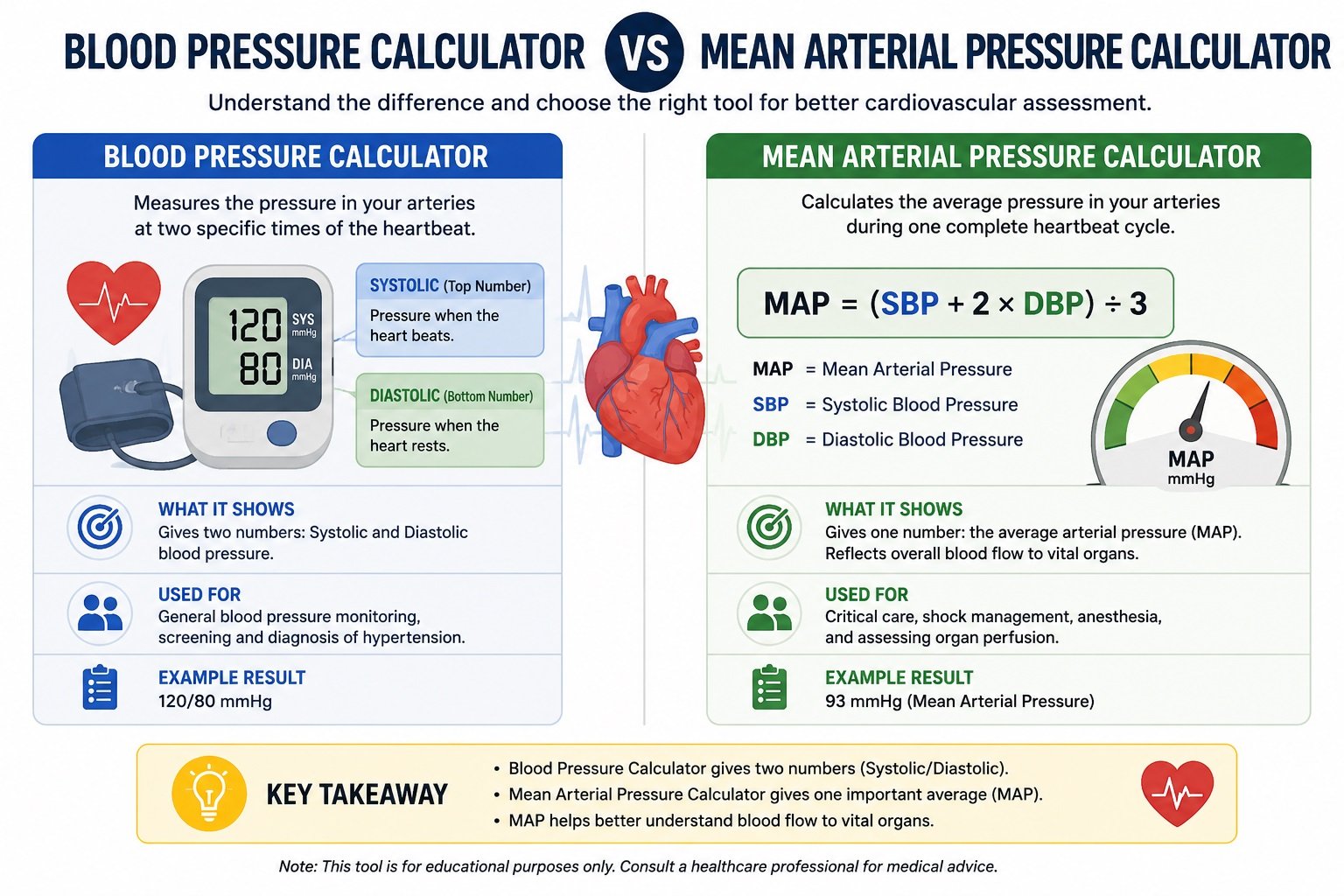
Blood Pressure Calculator vs Mean Arterial Pressure Calculator
A regular blood pressure calculator focuses on systolic and diastolic values. A MAP calculator goes one step further by calculating the average pressure inside the arteries.
Both measurements are useful, but MAP often provides a better understanding of blood flow throughout the body.
Understanding Blood Pressure and MAP
The relationship between blood pressure and MAP is important.
Blood pressure tells you the force of blood against artery walls at specific points during the heartbeat.
MAP represents the average pressure throughout the entire heartbeat cycle.
Because of this, MAP can be a useful measurement when doctors need to evaluate circulation and organ perfusion.
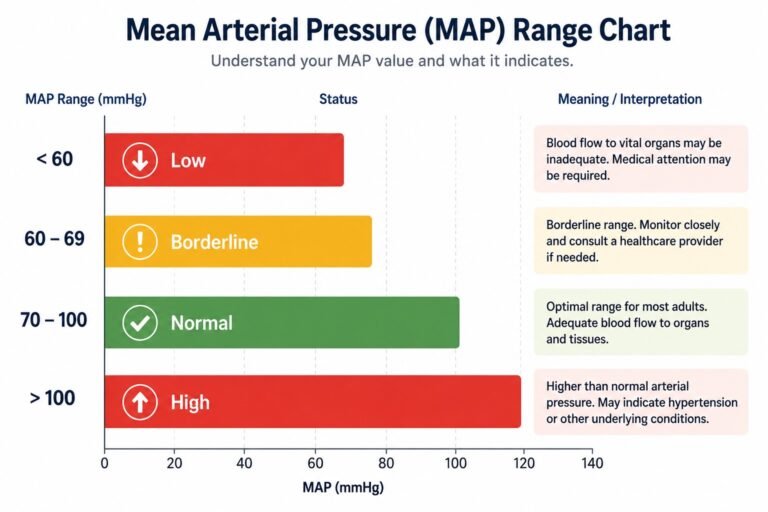
Normal MAP Range and What It Means
The normal MAP range for most adults is between 70 and 100 mmHg.
A result within this range generally means blood is flowing adequately to important organs.
Normal MAP Range Chart for Quick Reference
| MAP Value | Meaning |
| Below 60 mmHg | Low blood flow |
| 60–70 mmHg | Borderline |
| 70–100 mmHg | Normal Target Range |
| Above 100 mmHg | Higher than normal (elevated) |
Mean Arterial Pressure (MAP) Interpretation Chart
Use this MAP chart to understand whether your Mean Arterial Pressure (MAP) is low, normal, or high.
| MAP Range (mmHg) | Status | Interpretation |
|---|---|---|
| < 60 | Low | Blood flow to vital organs may be inadequate. |
| 60 - 69 | Borderline | Monitor closely and consult a healthcare provider if needed. |
| 70 - 100 | Normal | Typical target range for healthy blood circulation. |
| > 100 | High | Higher than normal arterial pressure. |
Low Mean Arterial Pressure: What Does It Mean?
A low mean arterial pressure usually means that blood may not be reaching vital organs as effectively as it should.
Possible causes include:
- Dehydration
- Blood loss
- Severe infection
- Certain medications
- Heart problems
Very low MAP values may require medical attention, especially if symptoms are present.
Symptoms of Low Mean Arterial Pressure
Some people may experience:
- Dizziness
- Weakness
- Fainting
- Blurred vision
- Confusion
High Mean Arterial Pressure: What Does It Mean?
A high mean arterial pressure may indicate increased pressure inside the arteries.
This can happen because of:
- High blood pressure
- Stress
- Heart disease
- Kidney disease
- Certain medications
A consistently high MAP can place extra strain on the heart and blood vessels.
Mean Arterial Pressure and Cardiovascular Health
Maintaining a healthy MAP is an important part of overall cardiovascular health.
Healthy habits that may support normal blood pressure and circulation include:
- Regular exercise
- Eating a balanced diet
- Limiting excess salt
- Maintaining a healthy weight
- Managing stress
- Avoiding tobacco products
These lifestyle choices can support healthy blood vessels and heart function.
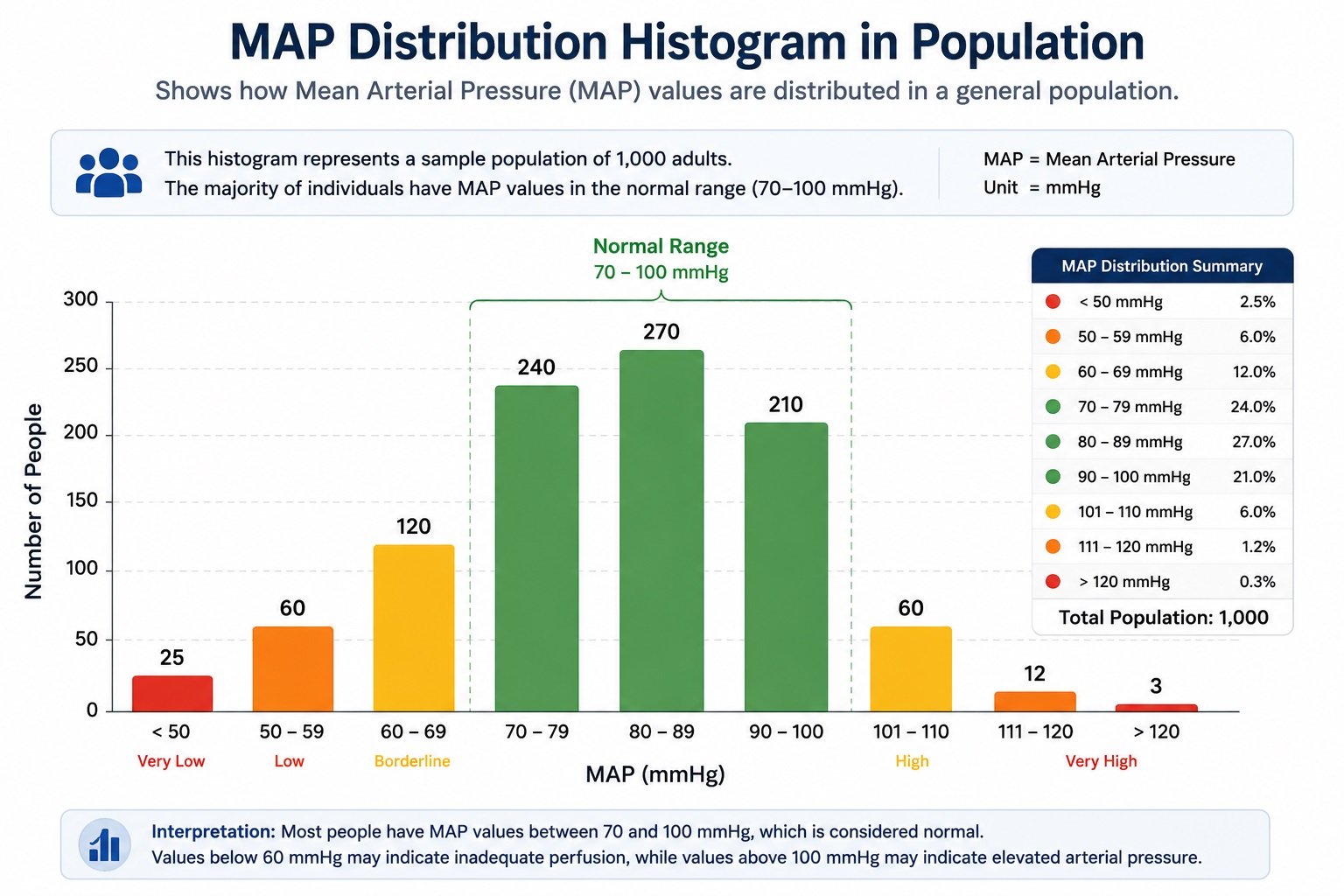
MAP Distribution Histogram
A MAP Distribution Histogram shows how Mean Arterial Pressure values are spread across a population. It helps visualize how many people fall within different MAP ranges and provides a better understanding of overall cardiovascular health. Most healthy adults are typically found within the Normal MAP Range of 70–100 mmHg.
Understanding MAP Interpretation
This chart can make MAP Interpretation easier by showing the percentage of people with Low Mean Arterial Pressure, normal values, or High Mean Arterial Pressure. Healthcare professionals often use this type of graph during blood pressure monitoring and research studies. When used with a Mean Arterial Pressure Calculator or MAP Calculator, a histogram helps explain how an individual’s average arterial pressure compares with the general population.
Arterial Pressure Calculator for Students and Healthcare Professionals
An arterial pressure calculator is commonly used by:
- Doctors
- Nurses
- Pharmacists
- Medical students
- Pharmacy students
- Emergency healthcare workers
It provides a quick way to estimate arterial pressure without performing the calculation manually.
Frequently Asked Questions About Mean Arterial Pressure (MAP)
1. What is Mean Arterial Pressure (MAP)?
Mean Arterial Pressure (MAP) is the average pressure in your arteries during one complete heartbeat. It helps show how well blood is flowing to important organs such as the brain, heart, and kidneys.
2. How do you calculate Mean Arterial Pressure?
MAP is commonly calculated using the formula: MAP = (Systolic Blood Pressure + 2 × Diastolic Blood Pressure) ÷ 3. This formula gives more weight to diastolic pressure because the heart spends more time relaxing than pumping.
3. What is a normal MAP range?
A normal MAP range for most adults is between 70 and 100 mmHg. This range generally indicates that the body's organs are receiving enough blood and oxygen.
4. What does a MAP below 60 mmHg mean?
A MAP below 60 mmHg may mean that important organs are not receiving enough blood flow. This can happen due to dehydration, blood loss, heart problems, or other medical conditions.
5. What does a high MAP mean?
A high MAP usually indicates increased pressure within the arteries. It may be associated with high blood pressure, stress, kidney disease, or other cardiovascular conditions.
6. Is MAP more important than blood pressure?
Both measurements are important. Blood pressure provides systolic and diastolic readings, while MAP gives an estimate of the average pressure throughout the entire heartbeat cycle and may better reflect organ perfusion.
7. Why do doctors monitor MAP in hospitals?
Doctors often monitor MAP in hospitals and intensive care units because it helps determine whether vital organs are receiving enough blood flow. MAP is especially important in critically ill patients.
8. Can I calculate MAP from my blood pressure reading?
Yes. If you know your systolic and diastolic blood pressure values, you can calculate MAP manually using the standard formula or use an online Mean Arterial Pressure Calculator for instant results.
9. Does age affect Mean Arterial Pressure?
Blood pressure often changes with age, which can affect MAP values. However, the formula used to calculate MAP remains the same regardless of age.
10. How can I maintain a healthy MAP?
You can support a healthy MAP by maintaining a healthy weight, exercising regularly, eating a balanced diet, limiting excess salt intake, managing stress, avoiding tobacco products, and following your healthcare provider's recommendations.
Trusted Medical References
- National Center for Biotechnology Information (NCBI) – Physiology, Mean Arterial Pressure (StatPearls Publishing)
- Monroe Community College (MCC) – Mean Arterial Pressure (MAP)
- Cardiovascular Physiology Concepts – Mean Arterial Pressure
- American Medical Association (AMA) – Blood Pressure Resources and Monitoring Tools
- National Institutes of Health (NIH) – Optimal Calculation of Mean Arterial Pressure From Pulse Pressure
Medical Review & Calculator Development
This calculator and its related educational content have been verified by Adesh Pundir, RPh, a licensed pharmacist in the State of Texas (License #54111) with professional pharmacy experience since 2013. Adesh also holds a Master’s Degree in Information Systems, combining healthcare expertise with advanced knowledge of technology, software development, and healthcare information systems.
His areas of expertise include pharmacy calculations, medication dosing algorithms, pharmaceutical compounding, pharmacy informatics, counseling, healthcare software solutions, and clinical decision-support systems. Each calculator is designed using established pharmacy principles, professional standards, USP guidelines where applicable, and evidence-based references to help improve calculation accuracy, educational value, and patient safety.
Disclaimer: This content is for educational purposes only and should not be considered medical advice. Always consult a qualified healthcare professional for personalized recommendations.