
Pregnancy Due Date Calculator (Trimester Timeline)
Pregnancy Due Date Calculator (Accurate Baby Due Date)
This tool figures out when your baby will likely arrive by using a starting point; like your last period, conception, or IVF transfer. It then adds the right number of days based on a standard 40-week pregnancy. No one can predict the exact day, but this gives you a solid target to aim for. It’s a great way to plan appointments, know when each trimester begins, and track your baby’s growth week by week.
Estimate Weeks & Months
Instead of just giving you a date, this calculator also shows how far along you are in weeks and months. It breaks everything down so you can see which week you’re in and when the next trimester starts. Knowing your pregnancy in weeks is helpful because doctors use weeks to track development. The months part just gives you a rough idea of where you stand. It keeps things simple so you’re never left guessing how many weeks along you really are.
Pregnancy due date formula (Different ways to calculate pregnancy)
There are a few ways to calculate a due date, and each one uses a slightly different formula.
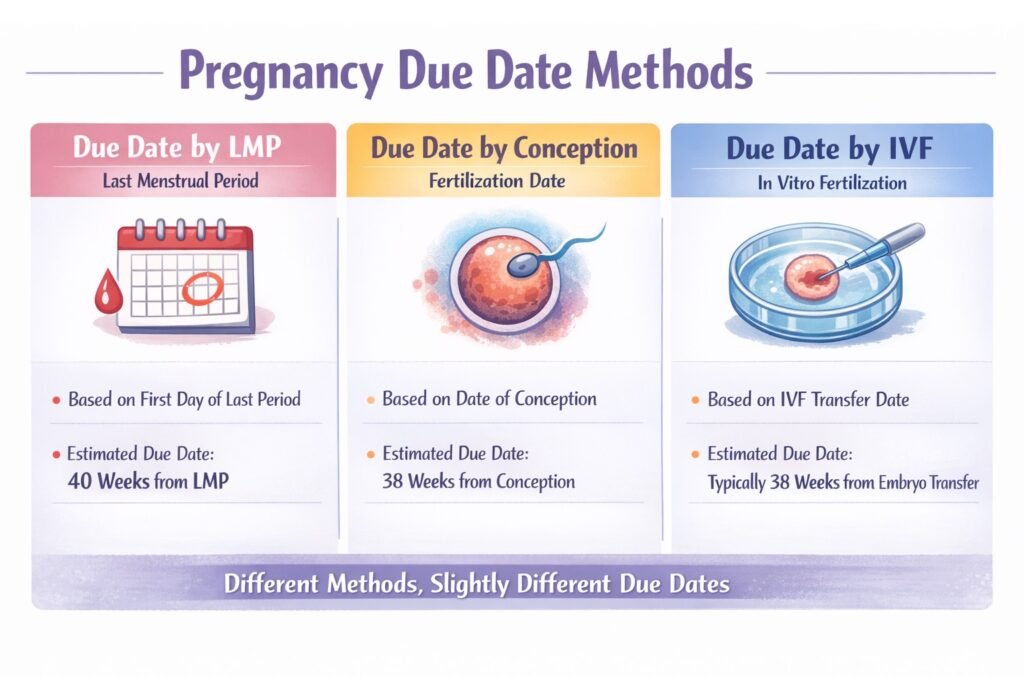
- If you know your last menstrual period, you add 280 days.
- If you know the exact day you conceived, you add 266 days.
- For IVF with a day-5 embryo, you add 261 days to the transfer date.
Each formula works because pregnancy length is pretty consistent about 40 weeks from LMP or 38 weeks from conception. The method just depends on what date you’re sure about.
You just pick the method that fits your situation—like LMP, conception, or IVF, just enter one date, and click calculate. Within seconds, you’ll see your estimated due date pop up in a clear circle. There is no complicated forms or confusing medical terms. Our calculator is built to give you a reliable answer so you can move on with planning your pregnancy. Whether you’re just curious or getting ready for doctor visits, or justa student doing research, this calculator gets you the info you need in no time.
Pregnancy Due Date Calculator by LMP (Last Menstrual Period)
Due date calculation using lmp (last menstrual period) is the most common way doctors estimate a due date. So you start with the first day of your last period and add 280 days, or 40 weeks to that date. The logic is that ovulation usually happens around two weeks after your period starts, so by the time you conceive, you’re already considered about two weeks pregnant. It’s a very simple estimate and works well if you have regular cycles. Even if your cycles aren’t perfect, it gives a solid starting point for tracking your pregnancy timeline.
Pregnancy due date by conception date (Fertilization)
If you know the exact day you conceived, may be because you were tracking ovulation or using an ovulation kit, then this method is more direct and better estimate. Instead of adding 280 days, you add 266 days. That’s because conception happens around two weeks after your last period, so you skip the early two-week head start. This can be more accurate if you’re sure about the date. It’s especially helpful for people with irregular cycles who can’t rely on the LMP method.
Pregnancy due date by IVF (In Vitro Fertilization)
Embryo Transfer For IVF pregnancies, the due date is based on the embryo transfer date. If you had a day-5 blastocyst transfer, you add 261 days to that date. The formula adjusts because the embryo is already a few days old at transfer. This method is very accurate since the dates are controlled in a lab. You’re not guessing about ovulation or periods. It gives you a due date that lines up perfectly with how your pregnancy is being tracked by your fertility clinic.
What is Naegele’s rule for pregnancy
Naegele’s rule is the old-school formula doctors still use today to estimate a due date. You take the first day of your last menstrual period, subtract three months, add seven days, and then add one year. It sounds fancy, but it’s really just a shortcut for adding 280 days. For example, if your last period started on March 15, you’d count back to December 15, add seven days to get December 22, then add a year. That’s your estimated due date. Simple math that’s been used for generations.
Pregnancy Trimester Calculation
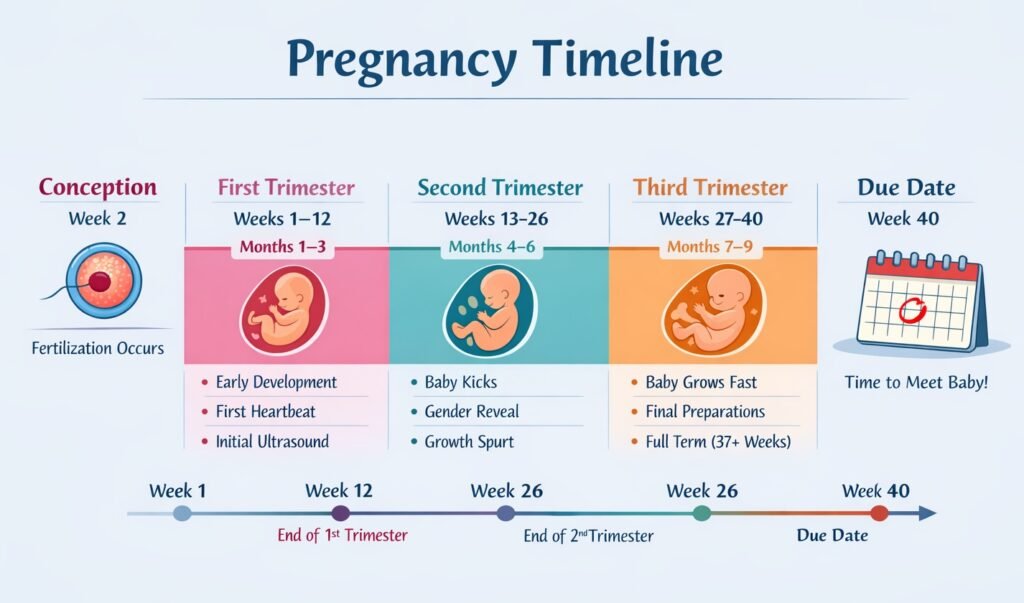
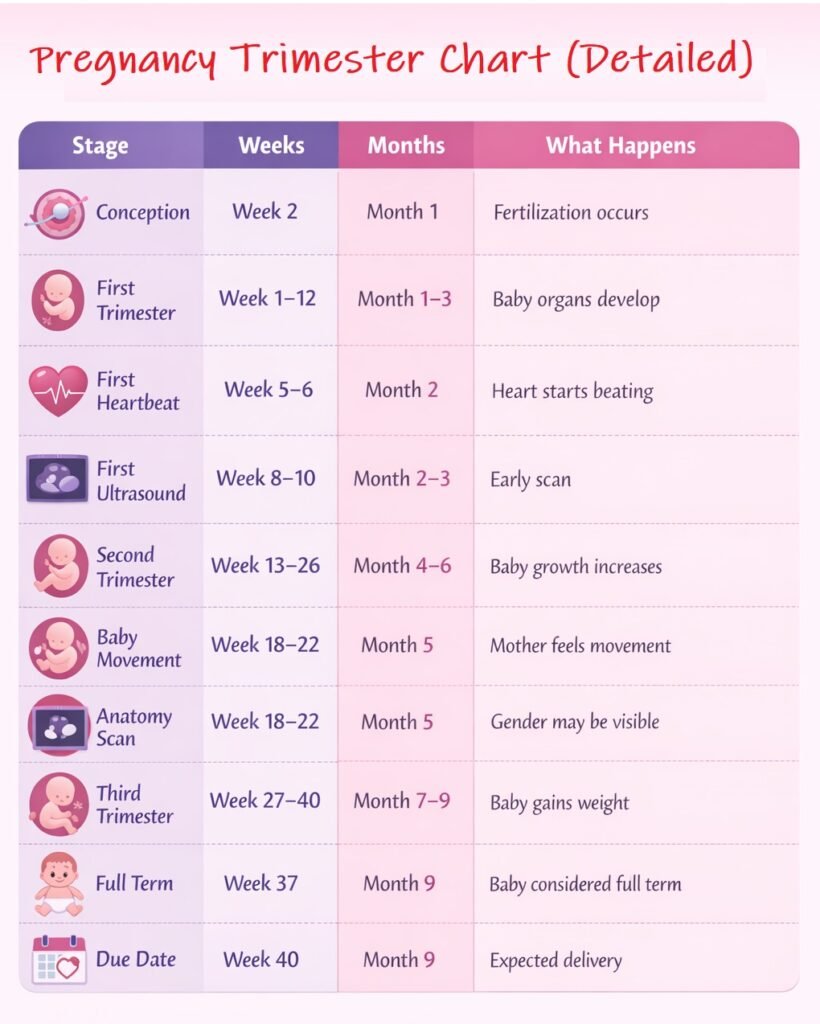
Trimester calculation is pretty straightforward once you know your due date. A full pregnancy is about 40 weeks, and it gets split into three equal parts called trimesters. The first trimester runs from week 1 to week 13. The second picks up at week 14 and goes through week 26. The third takes you from week 27 all the way to delivery around week 40. To figure out where you are, you just count the weeks from your last period or conception date. Doctors use these divisions to track your baby’s growth and schedule important tests along the way.
Pregnancy First Trimester Calculation
The first trimester covers weeks 1 through 13 of your pregnancy. First trimester actually starts before you even conceive. If you’re using the LMP method, week one begins on the first day of your last period. That means for the first two weeks, you’re not technically pregnant yet. The trimester really kicks into gear after conception, when your body starts changing fast. To calculate it, just count 13 weeks forward from your LMP or about 11 weeks from your conception date. This is when morning sickness and early development happen.
Pregnancy Second Trimester Calculation
The second trimester runs from week 14 to week 26. A lot of women call this the “sweet spot” because early symptoms like nausea usually fade away, and you start feeling more like yourself. To calculate it, you simply find the start of week 14 based on your due date or LMP. You can also think of it as the middle three months of your pregnancy. This is when you’ll likely feel those first little flutters of movement, find out the baby’s gender if you want, and see your belly really start to show.
Pregnancy Third Trimester Calculation
The third trimester starts at week 27 and goes all the way until you give birth, which is typically around week 40. To calculate it, you count 27 weeks forward from your LMP or about 25 weeks from your conception date. This is the home stretch. Your baby gains most of their weight during this time, and you’ll have more frequent doctor visits to make sure everything’s on track. It usually lasts about three months, but every pregnancy is different—some babies come a little early, and others stay put past their due date.
Questions & Answers
When is my pregnancy due date, how to estimate?
Your due date is usually about 40 weeks from the first day of your last period. If you know exactly when you conceived, count 38 weeks from that day instead. For IVF pregnancies, it’s about 261 days after a day-5 embryo transfer. You can use our online calculator or do the math yourself. Just add 280 days to your LMP. Keep in mind this is just an estimate. Only about 5% of babies actually arrive on their exact due date. Most come sometime between 37 and 42 weeks.
How accurate is pregnancy due date?
Due dates are educated guesses, not guarantees. Early in pregnancy, if you get an ultrasound around 8 to 12 weeks, that can give a pretty accurate estimate because babies grow at similar rates in the beginning. Later on, growth can vary a lot, so due dates based on later ultrasounds are less reliable. If your cycles are irregular or you’re unsure about dates, an early ultrasound is your best bet. But even with perfect info, only about 1 in 20 babies actually show up exactly on their predicted day.
How many weeks is pregnancy?
Pregnancy is typically counted as 40 weeks long. That might sound like a long time, but here’s the catch, you’re not actually pregnant for the first two weeks. Doctors start counting from the first day of your last period, which is about two weeks before you even conceive. So from conception to delivery, it’s really about 38 weeks. Either way, 40 weeks is the standard number you’ll hear. Full term is considered anywhere from 39 to 40 weeks, though babies born from 37 weeks onward are usually just fine.
How to calculate baby due date?
There are a few ways to calculate your due date. The most common is Naegele’s rule: take the first day of your last period, subtract three months, add seven days, then add a year. Or just add 280 days to that date. If you know your conception date, add 266 days instead. For IVF with a day-5 transfer, add 261 days to the transfer date. You can also let a calculator do the work—just pick your method, enter one date, and it gives you an estimate in seconds.
Can due date change during pregnancy?
Yes, due dates can shift, especially early on. If your first ultrasound shows a different date than what you calculated based on your LMP, doctors will usually go with the ultrasound measurement because it’s more reliable. This is most common in the first trimester. Later in pregnancy, due dates usually don’t change unless there’s a major size difference. It’s not that your baby’s actual due date moved—it’s that the initial estimate got refined with better information. Most changes happen before 20 weeks.
What week will my baby be born?
Nobody can say for sure, but there are some patterns. Full-term babies are born anywhere from 37 to 42 weeks. First-time moms tend to go a little later, sometimes around 40 weeks and 5 days on average. If you’ve had babies before, you might deliver a bit earlier. Genetics also play a role if your mom went late, you might too. About half of all babies arrive by 40 weeks, and the other half come after. Honestly, your baby will show up when they’re ready.
Pregnancy Calculator: How Far Along Am I?
Figuring out how far along you are is all about counting from your last menstrual period. If your LMP was 20 weeks ago, you’re about 20 weeks pregnant. If you know your conception date, add two weeks to that to get your gestational age. A pregnancy calculator does this math for you just enter your LMP, conception, or transfer date, and it tells you exactly how many weeks and days you are. It also shows your due date and what trimester you’re in. Super helpful for tracking appointments and baby’s growth.