
Laundry Cost Calculator – Calculate Cost Per Load, Month & Year
🧺 Laundry Cost Calculator
Input Details
Instant Results
$0.00 / week
Monthly: $0.00
Yearly: $0.00
Breakdown (Monthly)
| Electricity | |
| Water | |
| Detergent |
Comparison
Smart Insight
Table of Contents
How to Use the Laundry Cost Calculator (Step-by-Step Guide)
Our laundry cost calculator helps you quickly estimate the cost of washing and drying clothes at home or at a laundromat. Follow the steps below to calculate your cost per load, monthly cost, and yearly expenses with accurate results.
Step 1: Enter Number of Laundry Loads Per Week
Start by entering how many loads you do each week. This is the most important factor in calculating your weekly and monthly laundry cost. A typical household does 4–8 loads per week depending on family size.
Step 2: Input Electricity Cost (Cost Per kWh)
Enter your local electricity rate in dollars per kilowatt-hour (kWh). This helps calculate the cost of running a washing machine and dryer. You can find this value on your electricity bill.
Step 3: Add Water Cost Per Gallon
Provide your water cost per gallon to estimate the water usage cost per load. This is especially important for households using high-efficiency or top-load washers.
Step 4: Enter Washer and Dryer Energy Usage
Input the energy consumption of your washer and dryer (kWh per load). This allows the calculator to determine the total electricity cost
Step 5: Enter Water Usage Per Load
Specify how many gallons of water your washing machine uses per load. This helps calculate your total water cost per load and monthly consumption.
Step 6: Add Detergent Cost Per Load
Include the cost of detergent, fabric softener, and dryer sheets per load. This gives a complete estimate of your total laundry cost per load.
Step 7: Enter Laundromat Cost (Optional)
If you use a laundromat, enter the cost per load. This allows you to compare home laundry vs laundromat cost and see which option is more affordable.
Step 8: View Instant Laundry Cost Results
The calculator will instantly display your laundry cost per week, per month, and per year. You’ll also see a detailed cost breakdown including electricity, water, and detergent expenses.
Step 9: Analyze Cost Breakdown and Savings
Review the breakdown to understand where your money is going. The calculator also shows potential savings when comparing home laundry vs laundromat.
Step 10: Use Smart Tips to Reduce Laundry Costs
Based on your inputs, the calculator provides insights like how much you can save by reducing loads or improving efficiency. This helps you lower your monthly laundry expenses.
Why Use This Laundry Cost Calculator?
This tool is designed to give accurate and detailed insights into your laundry expenses. Whether you want to estimate cost per load, compare options, or reduce utility bills, this calculator helps you make informed decisions.
- Calculate laundry cost per load, week, month, and year
- Compare home washing vs laundromat costs
- Understand electricity and water usage impact
- Discover ways to save money on laundry
What is a Laundry Cost Calculator?
A laundry cost calculator is an online tool that helps you estimate how much money you spend on washing and drying clothes in a routine life. Our calculator consider various factors such as electricity usage, water consumption, detergent cost, and number of loads per week.
This tool is especially useful for comparing home laundry vs laundromat cost and identifying ways to save money.
What Factors Affect Laundry Cost?
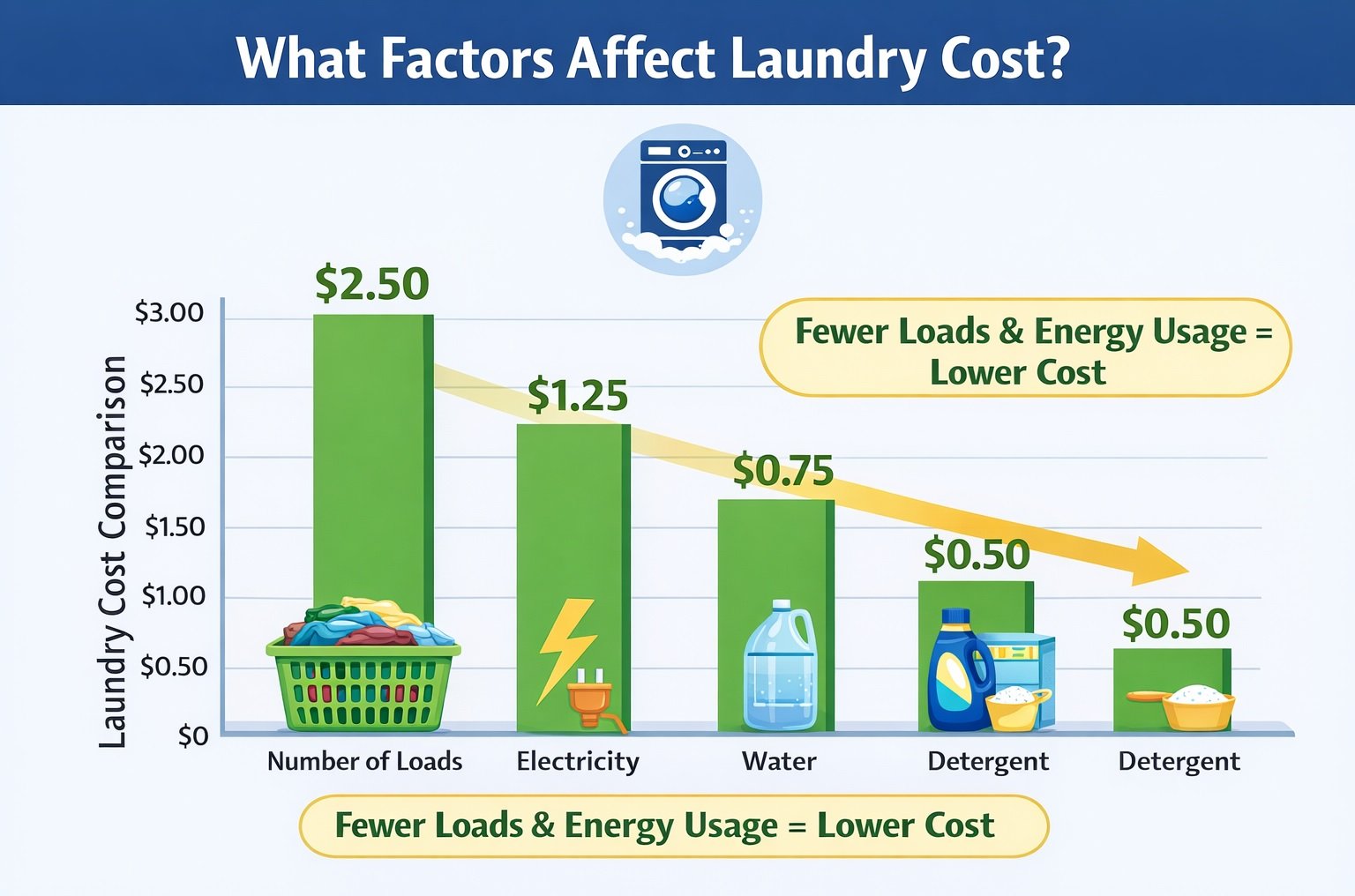
The cost of doing laundry may seem small, but it adds up over time. Your laundry cost per load, per month, and per year depends on several key factors. Understanding these can help you save money and reduce your utility bills.
1. Number of Loads Per Week
The number of loads you do each week has the biggest impact on your total laundry cost. The more loads you run, the more you spend on electricity, water, and detergent.
For example, if one load costs about $1.50 and you do 5 loads per week, that’s around $30 per month. If you increase to 8 loads per week, your monthly cost can go up to $50 or more.
Even reducing just 1 load per week can save you $5–$10 per month and over $100 per year.
2. Electricity Rates (Cost of Running Washer and Dryer)
Your washing machine and dryer use electricity, and the dryer is usually the biggest energy user. In fact, dryers can use up to 3–5 kWh per load, which makes them the most expensive part of laundry. If your electricity rate is $0.15 per kWh, one drying cycle alone can cost around $0.45–$0.75 per load.
Using cold water and air drying clothes can help reduce your laundry electricity cost significantly.
3. Water Usage Per Load
Every time you wash clothes, your machine uses water. Older top-load washers can use 30–40 gallons per load, while newer high-efficiency machines use only 15–20 gallons. If your water costs $0.005 per gallon, then one load can cost around $0.10–$0.20 just for water.
Over time, this adds up and increases your monthly laundry cost.
4. Detergent and Laundry Supplies
Detergent, fabric softener, and dryer sheets all add to your total cost. On average, detergent costs about $0.20–$0.50 per load, depending on the brand. If you do 20 loads per month, that’s about $4–$10 per month just on detergent.
Using too much detergent doesn’t clean better—it just wastes money. Using the right amount helps reduce your cost per load.
5. Washer and Dryer Efficiency
The type of machine you use makes a big difference. Older machines use more electricity and water, which increases your laundry cost. Energy-efficient washers and dryers can reduce energy use by up to 25–40%. That means lower bills every month.
For example, switching to a high-efficiency washer can save around $50–$150 per year depending on usage.
Why These Factors Matter
All these factors work together to determine your total laundry cost per month and per year. Small changes—like reducing loads, using cold water, or upgrading machines—can lead to big savings over time.
Use our laundry cost calculator above to see exactly how these factors affect your personal expenses.
Related Calculators
Home Laundry vs Laundromat Cost: Which Is Cheaper?
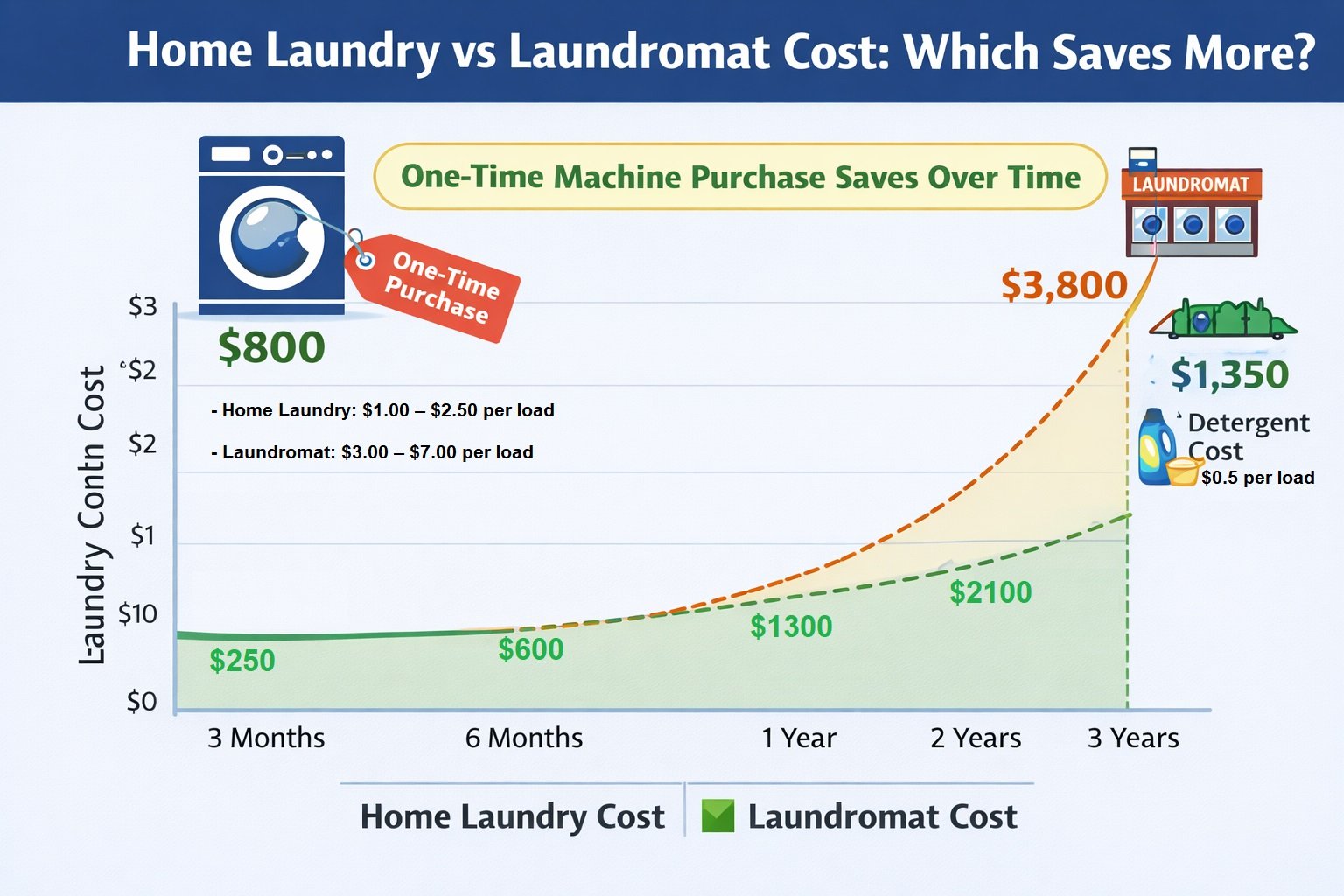
Many people wonder if it is cheaper to do laundry at home or go to a laundromat. The answer depends on your situation, but in most cases, washing clothes at home costs less over time.
Home Laundry Cost
Washing clothes at home is usually the cheaper option in the long run. You already have your own washing machine and dryer, so you only pay for electricity, water, and detergent.
- Lower cost per load: Most home laundry loads cost around $1 to $2.50.
- Convenient: You can wash clothes anytime without leaving your house.
- Saves time: No need to travel or wait for machines.
- Upfront cost: You need to buy a washer and dryer, which can be expensive at first.
For example, if you do 5 loads per week at $1.50 per load, you spend about $30 per month. Over a year, that’s around $360.
Laundromat Cost
Laundromats are useful if you don’t have a washing machine at home. However, they usually cost more per load.
- Higher cost per load: Each load can cost between $3 and $7.
- No equipment needed: You don’t have to buy or maintain machines.
- Good for large loads: Bigger machines can wash more clothes at once.
- Extra time and travel: You need to go to the laundromat and wait for your clothes.
If you do 5 loads per week at $5 per load, that’s about $100 per month, or $1,200 per year.
Which Option Saves More Money?
When you compare the two, home laundry is usually much cheaper over time. Even though you spend money upfront on machines, you save more each month.
In many cases, doing laundry at home can save you $500 to $1,000 per year compared to using a laundromat.
However, laundromats are still a good option if you don’t have space for a washer and dryer or only do laundry occasionally.
In most cases, doing laundry at home is cheaper. Home laundry costs about $1 to $2.50 per load, while laundromats cost $3 to $7 per load. Over time, washing at home can save $500 to $1,000 per year.
How to Reduce Laundry Costs and Save Money
Laundry may not seem expensive at first, but small costs add up over time. The good news is that there are simple ways to lower your laundry cost per load and monthly expenses without much effort.
1. Wash Clothes in Cold Water
Heating water uses a lot of electricity. By switching to cold water, you can save money on every load. Most modern detergents work just as well in cold water, so your clothes will still come out clean.
For example, using cold water instead of hot can reduce your laundry energy cost by up to 30–40%.
2. Use Energy-Efficient Washing Machines
Newer washing machines are designed to use less water and electricity. If you are using an old washer, it may be costing you more than you think.
Energy-efficient machines can use 15–20 gallons per load instead of 30–40 gallons, which helps lower your water and electricity bills.
3. Air Dry Clothes Instead of Using a Dryer
The dryer is the most expensive part of doing laundry. It uses a lot of electricity for every load.
If you air dry your clothes, even for a few loads each week, you can save a good amount of money. For example, skipping the dryer can save around $0.50–$1 per load.
4. Reduce the Number of Loads Per Week
Doing fewer loads is one of the easiest ways to save money. Try to wash full loads instead of small ones.
If you reduce just one load per week, you could save around $5–$10 per month and over $100 per year.
5. Use the Right Amount of Detergent
Using more detergent does not make clothes cleaner—it just wastes money. Most people use more than they actually need.
By using the correct amount, you can lower your cost per load and make your detergent last longer.
Small Changes Can Save Big Money
These small changes may not seem like much, but together they can reduce your monthly laundry cost by a large amount. Over a year, you could save hundreds of dollars just by changing a few habits.
You can reduce laundry costs by using cold water, air drying clothes, washing full loads, using energy-efficient machines, and avoiding excess detergent. These simple steps can save $100–$300 per year.
Average Laundry Cost in the USA (Per Load, Month & Year)
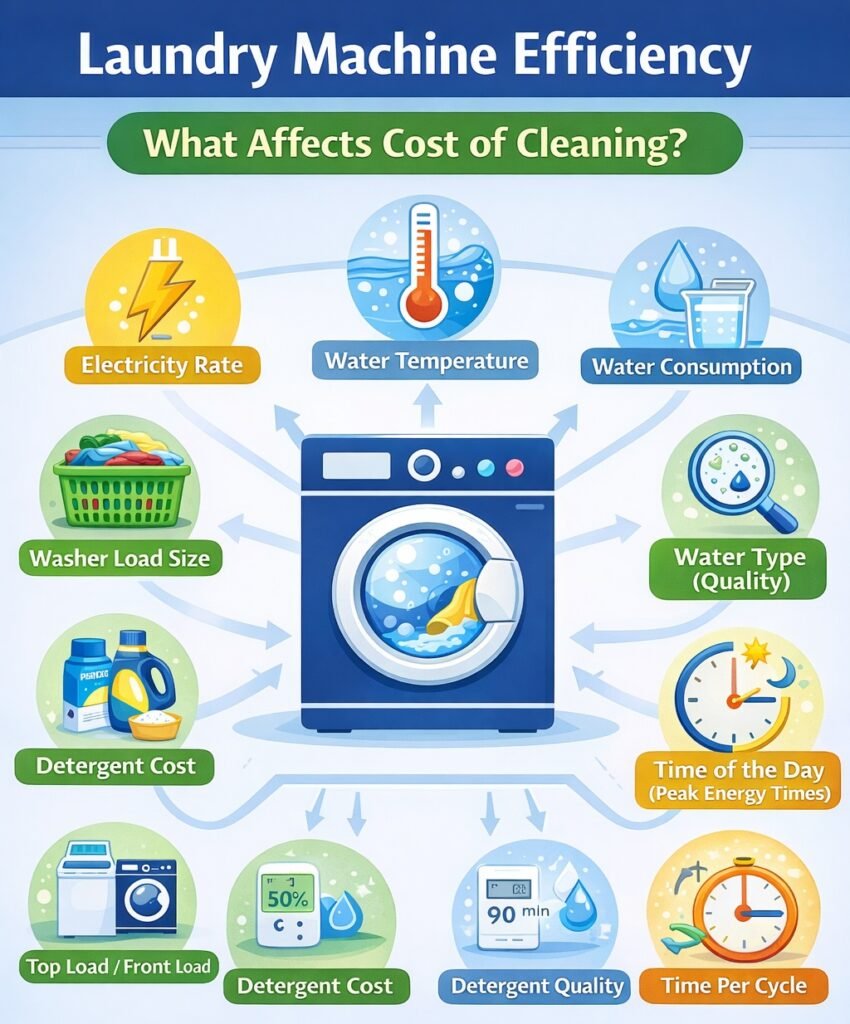
The average laundry cost in the United States varies depending on whether you wash clothes at home or use a laundromat. Factors like electricity rates, water usage, detergent costs, and machine efficiency all affect the total expense.
Average Cost Per Load
- Home: $1.00 – $2.50 per load
- Laundromat: $3.00 – $7.00 per load
Average Monthly Laundry Cost
- Single Person: $20 – $50 per month
- Family of 4: $80 – $200 per month
Average Yearly Laundry Cost
- Home: $250 – $1,000 per year
- Laundromat: $800 – $2,500 per year
Using a laundry cost calculator helps you estimate your exact expenses based on your usage, location, and utility rates. This gives a more accurate picture than general averages.
Frequently Asked Questions (Laundry Cost Calculator)
How much does laundry cost per load?
The average cost per load ranges from $1 to $2.50 at home and $3 to $7 at a laundromat, depending on electricity, water, and detergent costs.
Is it cheaper to do laundry at home or laundromat?
In most cases, doing laundry at home is cheaper. Laundromats can cost 2–3 times more per load due to machine usage fees.
How much does laundry cost per month?
Monthly laundry costs range from $20 to $50 for a single person and $80 to $200 for a family, depending on usage and location.
What uses the most energy in laundry?
The dryer consumes the most energy, often accounting for 70–80% of total electricity usage in laundry.
How can I reduce my laundry cost?
You can reduce costs by using cold water, air drying clothes, using high-efficiency machines, and reducing the number of loads per week.
References & Sources
-
University of Michigan – Clothes Dryers and Energy Cost
Highlights how dryers consume a large portion of household energy and how air drying can reduce laundry costs. -
University of Wisconsin – Appliance Energy Costs Guide
Provides detailed estimates of energy usage and operating costs for household appliances, including washers and dryers. -
Virginia Tech – Energy Use in Laundry
Explains how water temperature and washing habits impact total energy consumption and laundry expenses.