
Ovulation Calculator – Find Your Fertile Window & Best Time to Get Pregnant
📆 Ovulation Calculator | Fertility Tracker
📊 Fertility Calculation Results
📅 Monthly Fertility Calendar
What is Ovulation?
So, ovulation is basically when your body releases an egg from one of your ovaries. It happens about once per cycle. That little egg then starts traveling down your fallopian tube, hoping to bump into sperm.
If sperm shows up and fertilizes it? Congrats, pregnancy happens. If not, the egg just fades away, and your body sheds its uterine lining—hello, period.
Most people ovulate somewhere between 12 to 14 days before their next period. But honestly? Everyone’s different. Cycle lengths change, so ovulation can shift around. Getting to know your own rhythm helps whether you’re trying to conceive or just want to understand your body better.
What Is an Ovulation Calculator?
An online tool that helps you determine your most fertile days without the need for guesswork is called an ovulation calculator.
This is how it works: You enter in the first day of your last period, your average menstrual cycle length, and sometimes your luteal phase (that’s the time between ovulation and your next period). The tool does the math and gives you your estimated ovulation date and fertile window, also known as the best days to conceive if that’s what you’re aiming for.
It’ll also show when to expect your next period. Handy if you’re trying to get pregnant or just want to understand your cycle better. No pressure, just helpful info.
Additionally, it will indicate when your next period is due. useful if you want to better understand your cycle or are attempting to conceive. Just useful information, no pressure.
How Does Our Ovulation Calculator Work?
Let me walk you through how this thing actually works. It’s simpler than you might think.
First, You Choose Your Starting Point
We give you three ways to begin, depending on what you know:
Last Period (LMP)
If you know the first day of your most recent period, start here. This is the most common method. Here we take the first day of your period, add your cycle length minus your luteal phase, and land on your estimated ovulation day. So if your cycle is 28 days and luteal phase is 14, you’ll ovulate around day 14.
Conception Date
If you already know or suspect when conception happened, this option works backwards to figure out your ovulation and cycle dates. Conception happens on ovulation day. So we set that as your ovulation date and work backward to find your last period.
In Vitro Fertilization (IVF) / Transfer Date
For those going through fertility treatment, you can enter your embryo transfer date. Since a Day 5 blastocyst is typically transferred, we backdate by 5 days to estimate ovulation. A Day 5 embryo transfer means ovulation happened about 5 days earlier. We subtract 5 days to get your ovulation date, then build the rest of your cycle from there.
Cycle Length
How many days from the start of one period to the next. The average is 28 days, but yours might be shorter or longer. We let you adjust from 21 to 45 days.
Luteal Phase
This is the time between ovulation and your next period. Most folks have a luteal phase around 14 days. It stays pretty consistent from cycle to cycle, even if your overall cycle length changes.
Calculation Results
After we crunch the numbers, you’ll see a full breakdown:
Ovulation Window
A range of days (usually ovulation day plus a couple days before and after) when you’re most likely releasing an egg.
Fertile or Intercourse Window
The best days to try if pregnancy is your goal. This is typically the five days leading up to ovulation, plus ovulation day itself.
Next Period Start Date
Based on your cycle length and luteal phase, we predict when your next period will show up.
Pregnancy Chances
We compare today’s date to your fertile window and give you a sense of whether you’re in a high, medium, or low fertility stretch.
Conception Estimate
The most likely timing if pregnancy occurs.
Due Date
If conception happens around ovulation, we estimate when a baby would arrive using standard pregnancy math.
Calendar View
A visual snapshot of your month. You’ll see which days are high fertility, which is ovulation day, and when to expect your next period.
When Do I Ovulate?
So here’s the thing that there’s no one-size-fits-all answer.
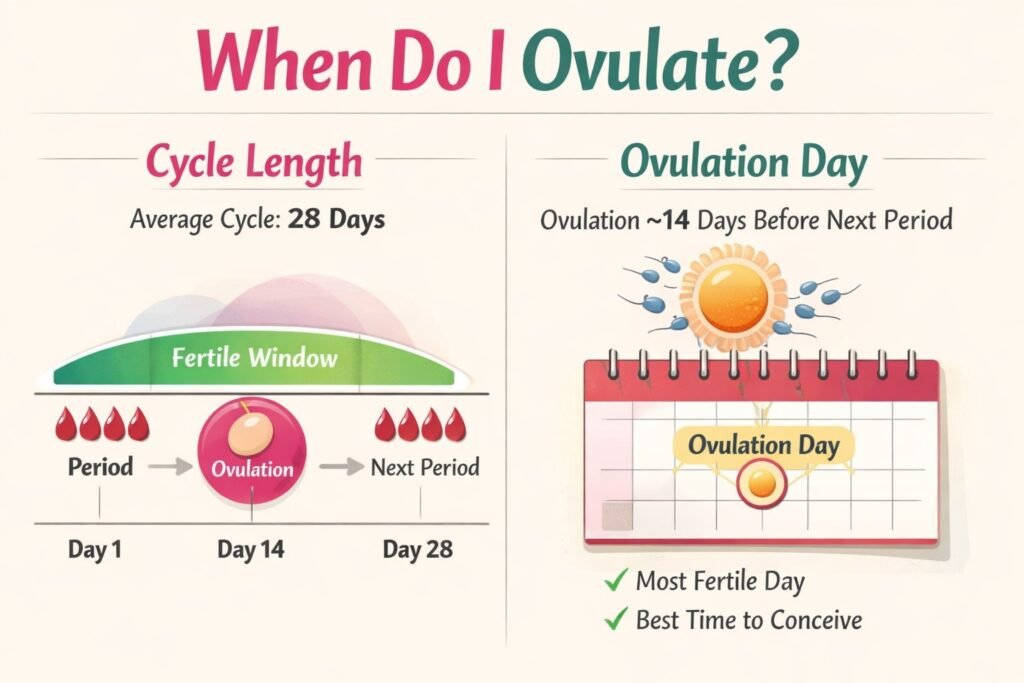
Most sources will tell you ovulation happens about 12 to 14 days before your next period. But unless your cycle is super regular, that’s just a rough guess.
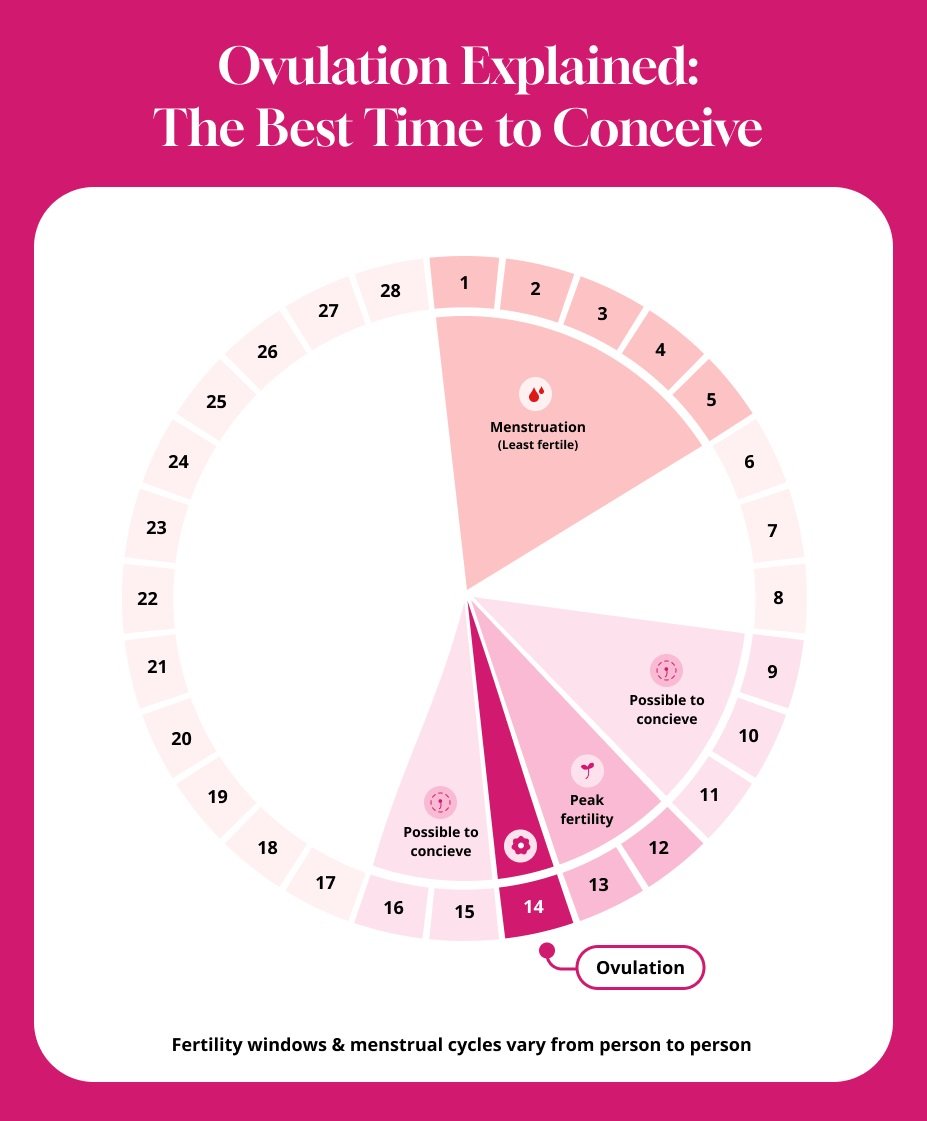
Let’s say your cycle is 28 days. You’ll probably ovulate somewhere around day 14. But if your cycle is 35 days? Then you’re ovulating later, maybe day 21 or so. If it’s 24 days? Earlier.
What throws people off is that ovulation can move around month to month. Stress, being sick, travel all of it can push things forward or back.
The main thing to know is your fertile window (the days when pregnancy is possible) are usually 5 days before ovulation and the day of ovulation itself. So if you can figure out roughly when you ovulate, you’ll know your best days.
Fertile Window Explained
Your fertile window is just a fancy name for the days when pregnancy can actually happen. Spoiler alert: it’s smaller than you might think.
Sperm can hang out in your body for up to five days, waiting for an egg. So your window opens about five days before ovulation and closes on ovulation day itself. Once the egg is released, you’ve got about 24 hours before the chance passes.
Your fertile window includes:
- 5 days before ovulation
- Ovulation day
Best days to conceive:
- 2–3 days before ovulation
- Ovulation day
Here’s a real example: if you ovulate on March 14, your fertile window runs from March 9 through March 14.
But if you’re trying to conceive, the best days to try are the two to three days right before ovulation plus ovulation day. That’s when your odds are highest.
Symptoms and Signs of Ovulation
Your body usually gives you little hints when ovulation is coming. Once you know what to look for, it’s hard to miss.
Changes in cervical mucus: This is the big one. A few days before ovulation, you might notice your discharge gets clear, slippery, and stretchy, similar to like raw egg whites. That’s your body’s way of saying “hey, now’s the time.”
Mild cramping: Some folks feel a twinge or ache on one side of their lower belly. It’s usually quick and harmless.
Slight spotting: A tiny bit of pink or brown discharge can happen around ovulation. Nothing to worry about.
Increased sex drive: Not everyone gets this, but a lot of people notice their libido picks up around ovulation. Your body knows what it wants.
Breast tenderness: Some people feel their breasts get sore or heavy right around ovulation.
Slight temperature shift: If you track your basal body temperature, you’ll notice it dips slightly right before ovulation, then jumps up the next day and stays higher until your period.
Not everyone gets all these signs, and they can change month to month. But once you start noticing your own patterns, it gets easier to tell when your body is gearing up to ovulate.
How Long Does Ovulation Last?
Ovulation itself, the actual release of the egg happens in a flash. We’re talking about 12 to 24 hours. That’s it. Once that egg leaves your ovary, it’s on a timer.
Ovulation itself lasts about 12 to 24 hours.
However:
- Sperm survives up to 5 days
- Egg survives 12 to 24 hours
But here’s where people get confused. Even though the egg only hangs around for about a day, your fertile window is much longer like five to six days. Why? Because sperm can chill in your fallopian tubes for up to five days, just waiting for that egg to show up.
If you’re trying to conceive, don’t stress about catching the exact moment of ovulation. Focus on the days before. That’s where the real opportunity is.
What Are Ovulation Cycle Phases?
There is more to your menstrual cycle than just your period. Every month, your body goes through an entire adventure. I’ll divide it into four stages.
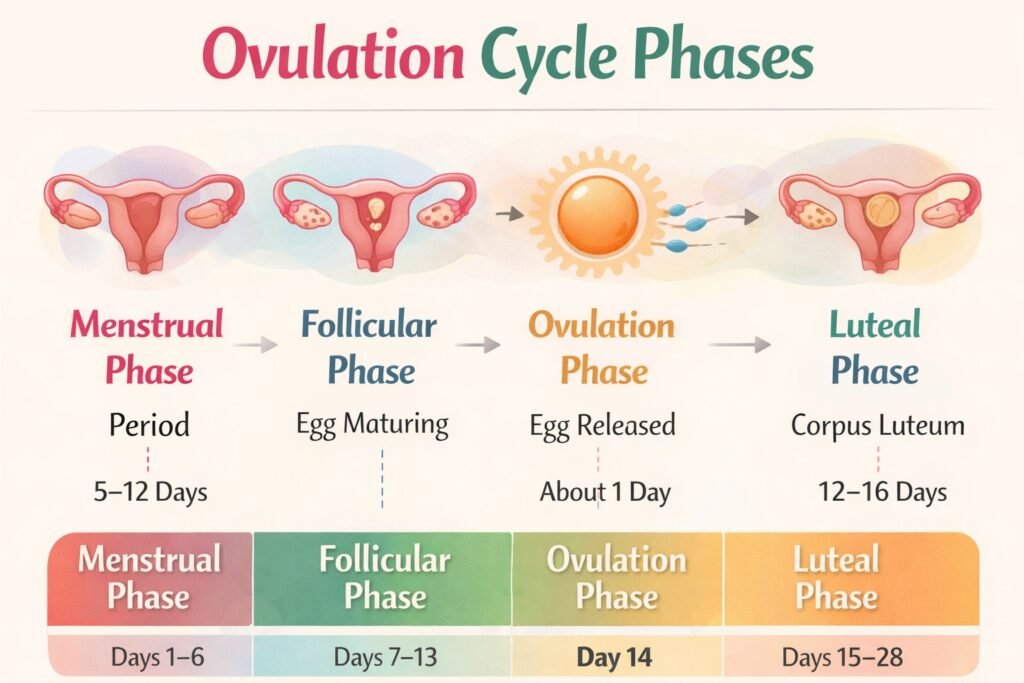
1. Menstrual Phase (about Days 1–5 or 6)
You are on your menstruation right now. The uterine lining from the previous cycle is being shed by your body. Although it may seem inconvenient, your body is simply reset. Your fresh cycle officially begins on the first day of your menstruation.
2. Follicular Phase (Days 7 to 13 – Overlaps with period, then continues)
Your body is already preparing for the following round when you are on your period. Your brain signals your ovaries to begin producing little sacs called follicles. Every follicle contains an egg. One follicle overtakes the others and continues to grow as the days pass. This stage continues until ovulation.
3. Ovulation Phase (Just one day)
The major event is this. That developed follicle explodes and releases an egg around the middle of your cycle. In an attempt to encounter sperm, the egg begins to move down your fallopian tube. The entire discharge takes place over the course of 12 to 24 hours. Pregnancy may occur if sperm appears during this period.
4. Luteal Phase (Days 15 to 28 – Days after ovulation until your next period)
The empty follicle becomes the corpus luteum once the egg departs. Despite its fancy name, all it does is release progesterone, a hormone that thickens the lining of your uterus in case you become pregnant.
Best Time to Get Pregnant – Timeline
If you’re trying to get pregnant, timing matters. But not in the way you might think. The best time isn’t waiting for ovulation day itself. It’s the days leading up to it.
Here’s why. Your egg only hangs around for about 12 to 24 hours after it’s released. But sperm? Sperm can stick around in your body for up to five days, just waiting for that egg to show up.
So your fertile window, the days when pregnancy is actually possible—is about six days total. That’s the five days before ovulation plus ovulation day.
But if you want to know the absolute best days to try? Aim for the two to three days right before you ovulate, plus ovulation day itself. Those four days give you the highest chance.
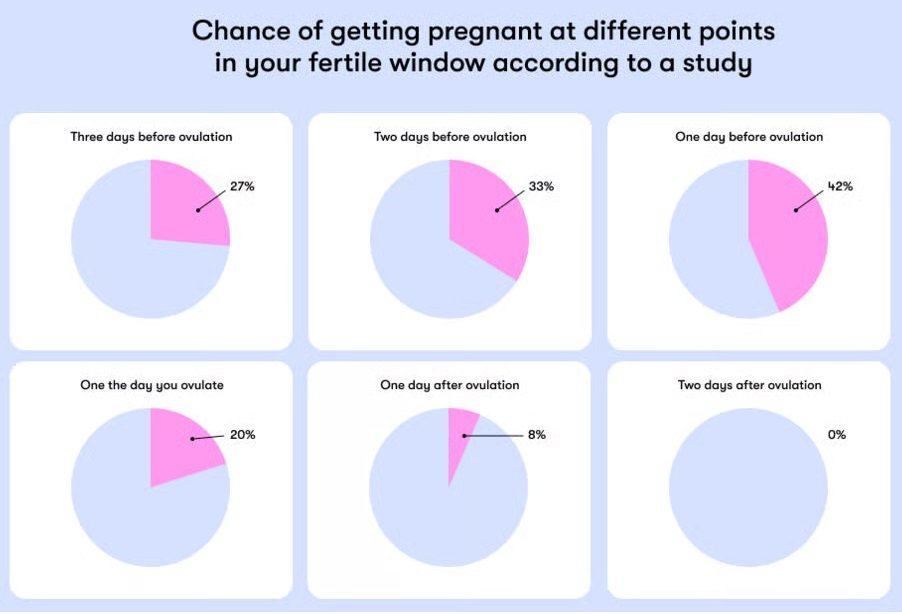
| Days Relative to Ovulation | Fertility Level | Pregnancy Chance |
| 5 Days Before Ovulation | Medium | Possible |
| 4 Days Before Ovulation | Medium | Better |
| 3 Days Before Ovulation | High | Very Good |
| 2 Days Before Ovulation | Very High | Best Time |
| 1 Day Before Ovulation | Peak | Highest Chance |
| Ovulation Day | High | Good Chance |
| 1 Day After Ovulation | Low | Very Low |
Why These Days Are Best
- Sperm can live up to 5 days inside the female body
- Egg survives only 12–24 hours after ovulation
- Therefore, having sperm already present before ovulation gives best chances
Medical experts recommend:
- Start trying 2–3 days before ovulation
- Continue until ovulation day
- Have intercourse every 1–2 days during fertile window
Who Should Use an Ovulation Calculator?
To be honest? Many individuals. To find one useful, you don’t have to be trying for a baby.
Women Attempting to Get Pregnant
The obvious one is this one. An ovulation calculator simplifies the process of determining your fertile days if you’re wanting to conceive. You have a clear window instead of wondering when to try. It simply lessens the intensity of the situation.
Women Tracking Cycles
It’s good to know what your body is doing, even if you’re not considering getting pregnant. Perhaps you simply enjoy being aware of your cycle, or perhaps you want to know why your mood changes at different times of the month. You can identify patterns with the use of an ovulation calculator.
Women Avoiding Pregnancy
There is a major disclaimer with this one. A calculator can provide you with a broad idea if your primary method of birth control is fertility awareness. But really? It’s not infallible. If you’re serious about avoiding pregnancy, it’s best to combine it with additional techniques like monitoring cervical mucus or temperature because cycles can be erratic.
Women who experience irregular periods
This is the difficult part, but it’s also where a calculator comes in quite handy. It is more difficult to anticipate ovulation if your cycles are irregular. Although a calculator won’t be 100% accurate, it can help you gradually identify trends. You may observe that your luteal phase, or the period following ovulation, remains rather constant despite irregular cycles. You can use that small signal to determine when ovulation is occurring.
Ovulation Calculator | Frequently Asked Questions
1. When do I ovulate after my period?
It depends on your cycle length. For most people with a 28-day cycle, ovulation happens around day 14, so about a week after your period ends. If your cycle is longer or shorter, ovulation day may happen earlier or later.
2. Can I get pregnant after ovulation?
Technically yes, but only on the day of ovulation itself. Once the egg is released, it lives for about 12 to 24 hours. Waiting until after ovulation may reduce your chances of pregnancy.
3. How accurate is ovulation calculator?
An ovulation calculator gives a helpful estimate based on average cycle patterns. However, if your cycle is irregular or ovulation changes, the prediction may not be exact. It works best for people with regular cycles.
4. Can ovulation change each month?
Yes, ovulation can change from month to month. Stress, illness, travel, sleep changes, and lifestyle factors may shift your ovulation day, even if your cycle is usually regular.
5. When am I most fertile?
You are most fertile during the two to three days before ovulation and the day of ovulation. These days give sperm the best chance to meet the egg and increase your chances of pregnancy.